
If you work in a pulp and paper mill, you already know what it costs when a pump goes down. Production doesn’t pause while you troubleshoot. The white-water loop doesn’t wait. Stock transfer doesn’t stop because a seal is weeping or a bearing is running hot. In that environment, the pump you specify isn’t just a line item it’s a decision that shows up in your uptime numbers for the next ten years.
That’s the environment the Sulzer APT was built for, and it’s the lens through which it should be evaluated.
Most process pumps don’t fail in paper mills because they’re poorly made. They fail because they were designed for clean, stable fluids and a paper mill doesn’t have many of those.
The moment you introduce air entrainment, fibre content, or limited suction head in a pit installation, a standard pump starts working against its own design. Cavitation increases. Wear accelerates. Efficiency drops quietly while the pump technically keeps running.
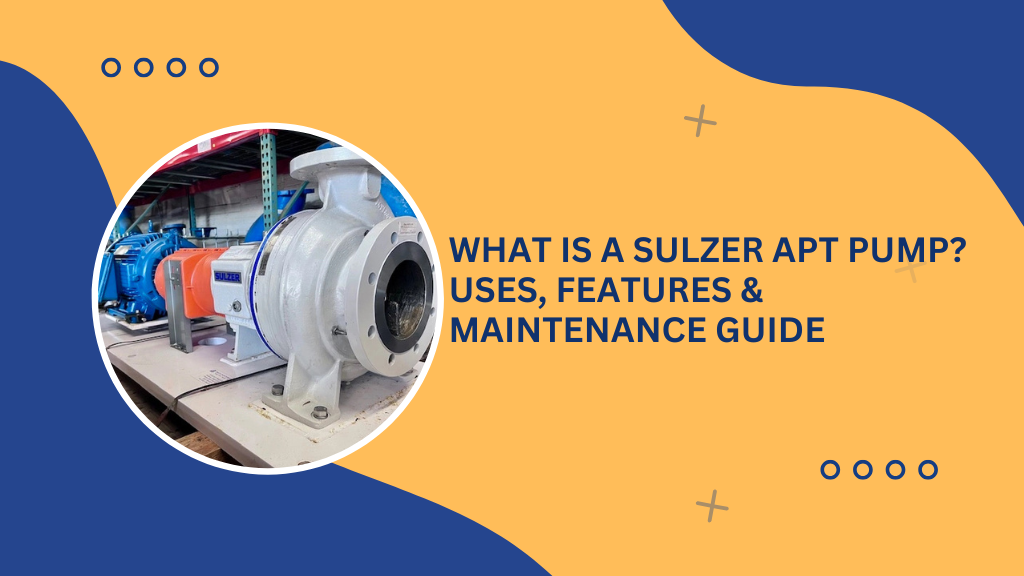
The APT’s design was built around those exact conditions from the start. The impeller geometry handles gas-laden and fibre-containing stock without cavitating. The low NPSH design suits basement and pit installations where suction head is always limited. The bearing frames are sized for continuous duty not the occasional service cycles most general process pumps are engineered around.
The practical result is a pump that holds its performance over years of runtime, not just the first few months after commissioning.
Built for continuous duty: In a paper mill, pumps run around the clock. The APT’s construction reflects that robust bearing frames, reliable sealing systems, and heavy-duty internals that hold up where lighter equipment tends to fall short of its rated service life.
Hydraulic efficiency across the operating range: Pumping systems accounts for a significant share of total facility energy consumption. The APT’s hydraulic design maintains efficiency across a wide operating range, not just at the peak of the curve. In continuous-duty applications, that difference adds up to real cost over time.
Material options matched to process conditions: Cast iron for standard water-based applications, duplex stainless steel for more aggressive process fluids, and a range of specialty alloys in between. The APT is available in configurations suited to almost any fluid you’re likely to encounter across a mill or industrial process facility.
Meets and exceeds ISO 5199 : The Sulzer APT design exceeds the requirements of ISO 5199 the international standard for centrifugal pump technical specifications. For procurement teams and engineers, that’s a reliable baseline for quality, performance, and safety.
Self-priming and degassing options As pulp and paper processes have evolved higher speeds, shorter retention times, smaller chests gas and air content in the stock has increased. The APT is available with self-priming and degassing configurations that keep the pump running cleanly even when process conditions introduce air into the system.
Modular, parts-friendly design Impellers, wear plates, casings, and sealing components are all individually replaceable. A modular design means you’re not ordering a full pump to restore performance you’re replacing what actually wore out. That keeps parts inventory lean and maintenance windows short.
Where the Sulzer APT Pump Gets Used
Pulp and paper mills This is the application the APT was designed around. Stock transfer, white water circulation, shower water systems, vacuum seal water, process water supply the APT covers the full range of low to medium consistency pumping duties across the mill floor.
Industrial water systems Cooling water loops, high-volume transfer, plant utility water anywhere consistent flow and reliable uptime are the primary requirements.
Chemical and process facilities For water-based process chemicals and compatible fluids in industrial settings adjacent to paper production, the APT’s material range and hydraulic performance make it a practical fit.
Wastewater and effluent treatment Within mill treatment systems and broader industrial wastewater applications, the APT delivers the steady performance needed to keep environmental compliance on track.
Retrofit and replacement projects Facilities originally built around legacy Sulzer equipment find that APT pumps drop in cleanly when aging units reach end of service life. OEM-compatible dimensions reduce engineering work and speed up turnaround.
The APT is a well-engineered pump, but no pump maintains itself. The facilities that consistently get a decade or more of service life out of these units tend to follow the same basic practices.
Walk the floor regularly. A quick weekly check for vibration changes, unusual noise, seal weeping, or reduced flow catches problems while they’re still inexpensive to fix. Don’t wait for a performance drop to tell you something is wrong.
Get lubrication right not just done. Too little grease dries out the bearing. Too much overheats it. Use the correct lubricant at the manufacturer’s specified interval, and don’t improvise. It’s one of the most common sources of premature bearing failure and one of the easiest to prevent.
Stay ahead of mechanical seals. Seal leaks rarely start loud. Monitor flush flow regularly. If you see any weeping, address it immediately a proactive seal replacement is a fraction of the cost of a contaminated housing and the downtime that comes with it.
Check internal clearances at every planned overhaul. As impeller and wear ring clearances open up over time, efficiency drops quietly, gradually, and invisibly unless you’re measuring it. Your power meter will eventually tell the story. Restoring clearances during scheduled maintenance keeps the pump performing to spec.
Verify alignment after every maintenance event. Misalignment is one of the leading root causes of early bearing and seal failure, and it’s entirely preventable. If vibration appears after a maintenance event, alignment is always the first thing to check.
Schedule by runtime, not the calendar. A pump running 24/7 in a harsh environment needs more frequent attention than one running part-time in a clean water application. Build PM intervals around actual operating hours and conditions, not arbitrary dates.
The Sulzer APT earned its place in mills and process facilities by performing consistently in conditions that shorten the service life of general-purpose pumps. For pulp and paper operations and the industrial environments connected to them it remains one of the most field-proven options available for continuous-duty process pumping.
If you’re sourcing a Sulzer APT pump for a new installation, a direct replacement, or a retrofit project, Peak Machinery stocks a wide range of APT models in both new surplus and used condition along with individual components including impellers, casings, power ends, and wear parts.
Browse our Sulzer APT inventory at www.peakmachinery.com or contact us. We’ll match you to the right model and size for your application.