

If part of your process needs flow that doesn’t budge when pressure does dosing a corrosive chemical, moving a thick syrup, pushing an abrasive slurry through a line chances are there’s a positive displacement pump handling it somewhere in your plant already.
These pumps show up constantly in chemical, food, pharmaceutical, and pulp and paper operations, and buying one used can save you real money and real time compared to waiting on a new OEM order. You just need to know what you’re looking at.
Right now our positive displacement stock covers lobe, metering, and rotary designs, and a few brands keep coming up again and again:
• Waukesha / SPX Waukesha the go-to for sanitary, food-grade rotary lobe work, built to handle CIP cleaning without issue.
• Alfa Laval a familiar name in food, beverage, and pharma lines where hygienic transfer matters.
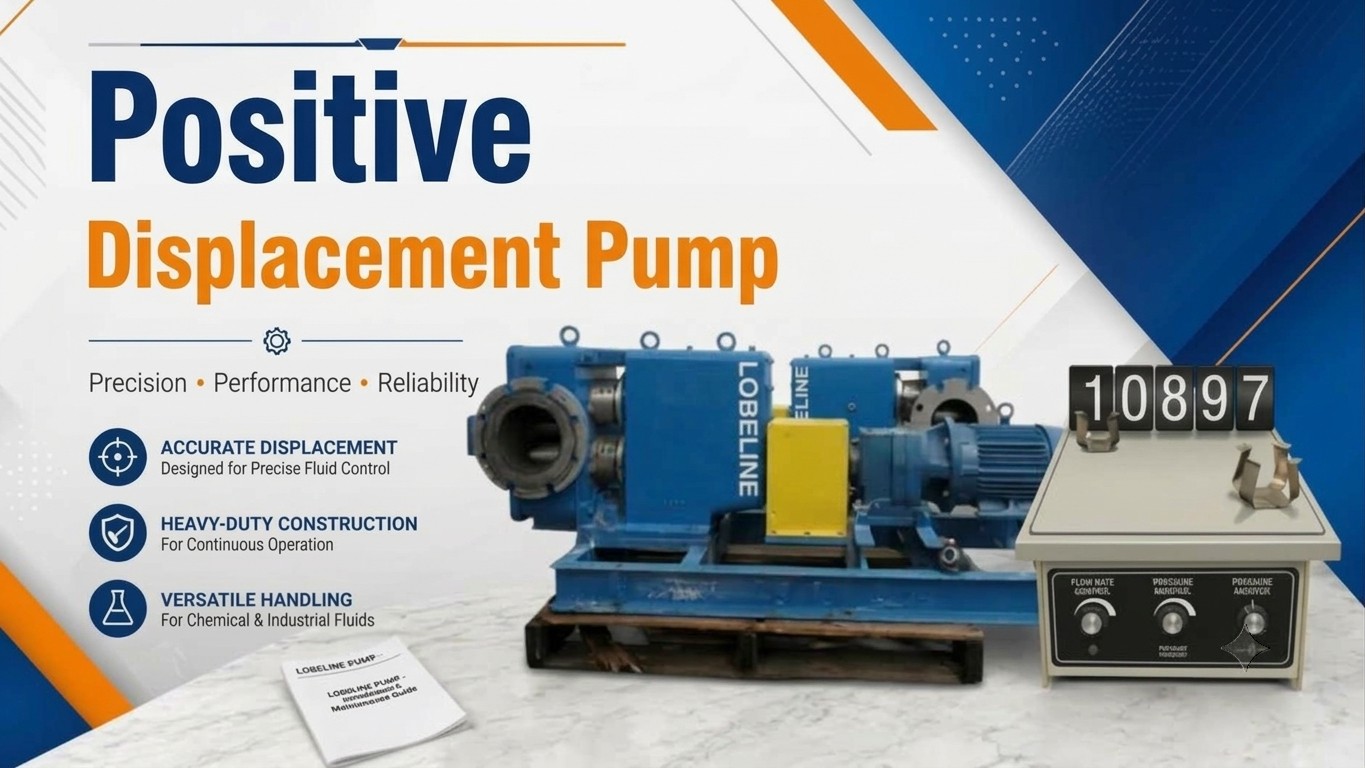
• LobeFlo and Lobeline rotary lobe pumps that take a beating in corrosive or heavily abrasive service, usually in 316 stainless.
• ITT Pureflo solid lobe pump technology for sanitary and general process transfer.
• Milton Roy the name most people reach for when they need a precision metering pump for chemical dosing.
• ZM Technologies basically a Waukesha-style rotary lobe pump, built to the same standard.
Some of what we have is unused, still sitting as spares. Some has been rebuilt. Some is a lightly used takeout. That range usually means there’s more than one price point available for a given size, not just one option.
New OEM units in this category can take a while to arrive, and the price difference between new and used is not small. Going the used route gets you:
1. Something you can actually get now instead of waiting weeks or months.
2. A real discount often a fraction of what a new unit costs.
3. More choice different brands and conditions to pick from, instead of just whatever the manufacturer happens to have.
Most of what we stock in this category is 316 stainless steel, and there’s a reason for that. It stands up to the corrosive chemicals these pumps are usually dosing, cleans down properly for sanitary or food-grade work, and doesn’t wear out fast when it’s pushing abrasive slurry. If you’re working with anything aggressive, or the application is food or pharma grade, stainless isn’t really optional at that point.
A product listing only tells you so much. Before you commit to anything, get these confirmed directly:
• Pump type lobe, gear, diaphragm, piston, or screw
• What the wetted parts are made of, and whether that’s compatible with your fluid
• Max RPM and pressure rating
• Flow rate you actually need (GPM or GPH) at your real operating pressure
• Condition new surplus, rebuilt, or used and whatever documentation exists
This is the step people skip when they’re in a hurry, and it’s usually why they end up with a pump that’s close, but not quite right.
• Chemical processing – dosing and transferring corrosive or viscous chemicals accurately
• Food and beverage – moving syrups, sauces, and other thick products sanitarily
• Pharmaceuticals -metering where the flow accuracy actually matters to the process
• Pulp and paper – stock, additives, and process chemical transfer
• Oil and gas – viscous fluid transfer under real pressure demands
If you want to see what’s actually available right now, take a look at the current positive displacement pump inventory. And if you’re after something specific that isn’t listed yet, just reach out a lot of what we have doesn’t make it online right away.